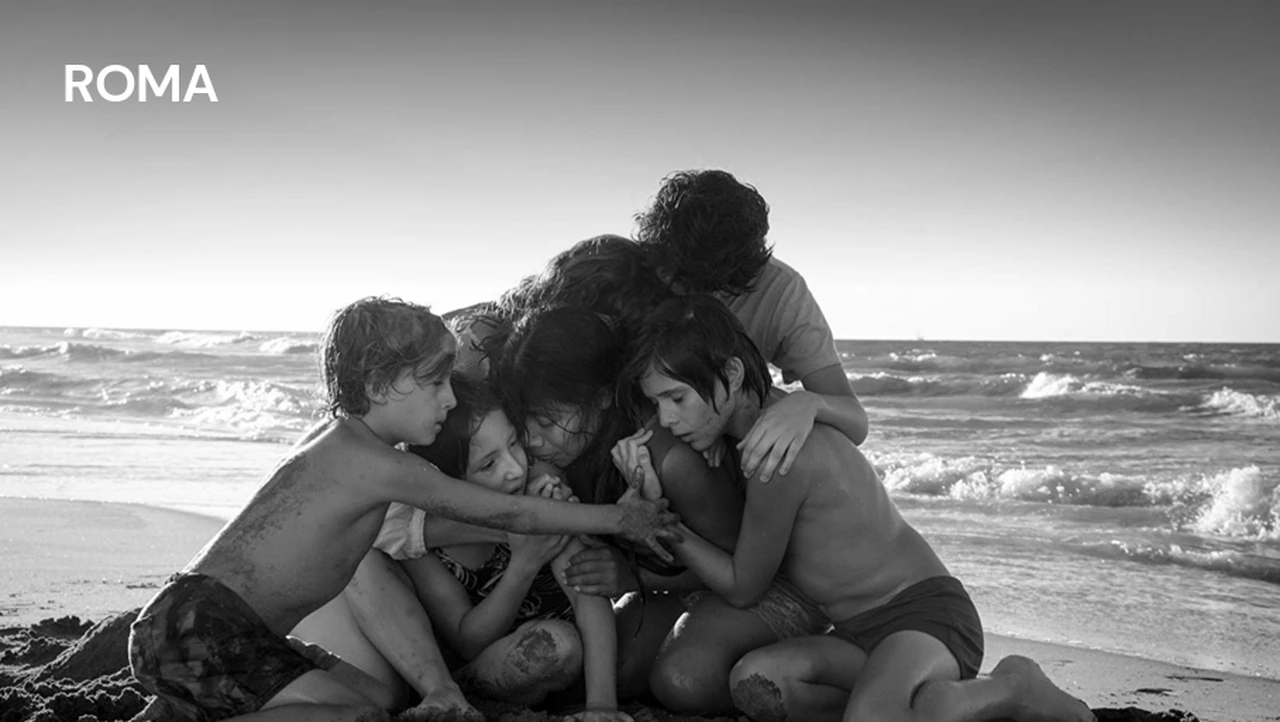
Director: Alfonso Cuarón · Cinematographer: Alfonso Cuarón · Composer: None (no original score) · Sound Design: Skip Lievsay, Craig Henighan, Sergio Díaz, José Antonio García · Production Design: Eugenio Caballero · Key Cast: Yalitza Aparicio, Marina de Tavira, Jorge Antonio Guerrero · Runtime: 135 minutes · Studio/Distributor: Esperanto Filmoj / Participant Media (Netflix) · Budget: $15 million · Box Office: ~$3 million domestic (limited theatrical; Netflix streaming primary release)
Roma: A Cathedral Built for the Woman Who Cleaned It
Most autobiographical films are acts of self-portraiture. The director looks backward, finds the child they once were, and places that child at the center of the frame. Alfonso Cuarón does something far stranger and more generous. He looks backward, finds his childhood, and then steps out of his own story. The protagonist of Roma is not the boy Cuarón was. It is the woman who raised him while he wasn’t paying attention.
Cleo, a Mixtec domestic worker in a middle-class Mexico City household, is the moral and emotional center of everything that unfolds across two hours and fifteen minutes of luminous black-and-white imagery. She washes floors and walks children to school and folds laundry and endures a pregnancy, an abandonment, a stillbirth, and a near-drowning rescue, all while the country outside the front door lurches through political violence and the family inside it quietly falls apart. She holds the house together. The film is the apology Cuarón could not make as a child because he did not yet understand that an apology was owed.
This is what elevates Roma above its considerable technical achievements. The cinematography is staggering. The sound design is revolutionary. The production design is obsessive in its fidelity. But the engine of the film is moral, not aesthetic. Cuarón has made a monument to a woman who lived inside his family’s life without fully belonging to it, who loved children that were not hers, who existed in the background of someone else’s story until a famous director decided, decades later, to bring her forward.
That decision is not without complication. There is a legitimate critique that Cuarón’s gaze aestheticizes the very suffering it claims to honor. That his camera, with its languorous pans and symmetrical compositions, turns poverty and heartbreak into something uncomfortably beautiful. The film is so visually perfect that it occasionally risks placing craft above feeling. In its quietest stretches, Roma can feel like watching someone else’s memory through glass: exquisite and distant.
But the beach sequence shatters that glass. When Cleo walks into the ocean to save the children she has raised, unable to swim, the film abandons its composure and becomes raw, urgent, terrifying. Everything the film has been building toward collapses into a single act of love so physically dangerous it could kill her. And when Cleo surfaces and the family holds her and she finally speaks the unspeakable truth she has carried through the entire film, the distance dissolves completely. You are no longer watching a memory. You are inside one.
Verdict: 9/10. Roma is a monumental work of personal cinema, one of the finest films of its decade and a landmark in how autobiography can be practiced on screen. Its formal beauty occasionally creates the very distance it seeks to bridge, and its pacing will test viewers who need narrative momentum. But the cumulative emotional power is extraordinary. Cuarón has made a film that sees the invisible, remembers the forgotten, and asks forgiveness without ever saying the word.
Filming Your Childhood Through the Maid’s Eyes
The most radical decision in Roma is not the black-and-white photography or the absence of a score. It is the point of view.
Cuarón spent over a decade preparing this film. He conducted hundreds of hours of interviews with Liboria “Libo” Rodríguez, the real domestic worker on whom Cleo is based. He interrogated his own family’s memories. He collected details about Libo’s daily routines with an almost forensic obsessiveness, asking questions like how she got out of bed each morning, whether she sprang up immediately or lingered. He wanted to reconstruct not just what he had seen as a child, but what he had failed to see. The life that happened below his line of sight.
This is autobiography practiced as an act of imaginative empathy. The film is Cuarón’s memory, but it is told through Cleo’s body. We see the family’s crisis through her peripheral vision. The father’s departure registers not as a dramatic confrontation but as an absence Cleo has to work around. The mother’s unraveling is something Cleo witnesses in fragments: a car scraped against the garage wall, a drunken late-night confession, a shattered piece of luggage.
The tension in this approach is productive and deliberate. Cuarón can only imagine Cleo’s inner life. He cannot know it. And the film, to its credit, does not pretend otherwise. Cleo remains partially opaque, her feelings communicated through posture and silence rather than dialogue or voiceover. Some critics have read this opacity as a failure of imagination, an unwillingness to fully grant Cleo the interiority she deserves. But the opacity also reads as honesty. Cuarón is acknowledging the limits of what a privileged man can know about the woman who served his family. He sees her. He does not claim to be her.
The result is a film that operates in a strange and powerful register: intimate but not confessional, deeply personal but seen from the outside. It is as though Cuarón has written a love letter and mailed it to the person standing in the same room.
Cuarón Behind His Own Camera: Memory in 65mm Black and White
Alfonso Cuarón has always worked with extraordinary cinematographers. Emmanuel Lubezki, his longtime collaborator, helped shape the visual language of Y Tu Mamá También, Children of Men, and Gravity. When Lubezki became unavailable for Roma, Cuarón made the startling decision to shoot the film himself. It was his first time serving as his own director of photography.
The choice turned out to be essential rather than expedient. Roma’s visual strategy is built on long, patient, horizontally panning shots that survey rooms, streets, and landscapes with the slow deliberation of someone trying to remember exactly how a space was arranged. These are not flashy tracking shots designed to impress. They are the movements of memory itself: scanning, searching, reconstructing. The camera pans from left to right across the family’s living room, finding details the way a person lying in bed might replay a childhood afternoon. It rotates 360 degrees as Cleo turns off the lights one room at a time, following her routine the way Cuarón must have watched it hundreds of times without ever thinking about it.
The ARRI Alexa 65 captures this in a black and white that is neither nostalgic nor stark. The greyscale is rich and contemporary, full of tonal gradation. There is no artificial grain, no attempt to mimic celluloid. This is digital monochrome used to strip away the sentimentality that color would invite and replace it with something more precise. Black and white becomes a tool for seeing clearly rather than for looking backward.
Close-ups are rare, and their scarcity makes them devastating when they arrive. For most of the film, the camera holds its subjects at a medium distance, framing them within their environments rather than isolating them from the world. Cleo is almost always shown in the context of the house she maintains, the streets she walks, the spaces she passes through. She is photographed as someone embedded in the physical world, not floating above it.
The long takes are not merely technical exercises. They are acts of attention. In a film about a woman whose labor was invisible, the camera’s refusal to cut away from her becomes a form of recognition. It stays with her. It watches her work. It does what Cuarón, as a child, did not do.
Yalitza Aparicio and the Radical Absence of Performance
Yalitza Aparicio had never acted in anything before Roma. She was a preschool teacher from Tlaxiaco, Oaxaca, who accompanied her sister to an open casting call and ended up being chosen instead. She could not swim. She had no training in how to hit a mark, find a light, or repeat an emotional beat across multiple takes. Cuarón kept the script from her entirely, revealing scenes only on the day they were shot, sometimes withholding information about what would happen next so that her reactions would be genuinely unrehearsed.
The performance that emerges from this method is unlike anything a conventionally trained actor would produce. Aparicio does not project emotion outward. She holds it in her body. Watch how she stands when Fermín abandons her at the movie theater: the stillness is not actorly composure, it is the immobility of shock. Watch her face during the delivery room sequence, where she learns that her baby has been born dead. There is no dramatic wail, no cinematic collapse. There is a woman looking at the ceiling, breathing, not yet able to process what has just been taken from her.
This restraint is what makes the beach confession so overwhelming. For nearly the entire film, Cleo has absorbed grief silently, performing her duties, smiling at the children, keeping the household running. When she finally breaks and admits that she did not want her baby, the admission arrives not as a dramatic climax but as something she can no longer physically contain. It leaks out of her. Aparicio delivers it in a way that makes you realize she has been holding this sentence inside her body for the entire film.
Marina de Tavira, the only professional actor in the principal cast, performs a different kind of miracle. Her Sofía is a woman whose entire life is collapsing while she tries to maintain the posture of someone in control. De Tavira plays the disintegration with precision: the smiles that arrive a beat too late, the laughter that tips into something sharper, the way she addresses Cleo with warmth that never quite crosses the boundary of employer and employee. Her Oscar nomination for Best Supporting Actress was well deserved. The two women orbit each other throughout the film, bound by affection and separated by class, and neither actor ever lets you forget the gap.
No Score, All World: Sound as the Film’s Invisible Architecture
Roma contains no original musical score. There is no composer credit because there is no composer. Every piece of music in the film comes from within the world itself: a radio playing in a kitchen, a marching band passing on a street, a television broadcasting a variety show. When the music stops, what remains is the sound of Mexico City in 1971, rendered with a density and spatial precision that no film had previously attempted.
The sound team, led by production sound recordist Sergio Díaz and re-recording mixers Skip Lievsay and Craig Henighan, mixed Roma in Dolby Atmos across a process that stretched over months and three different cities. Cuarón’s instructions were specific and spatial. He wanted sounds to move discretely through the room, to follow the pan of the camera, to rotate when the image rotated. When the camera slowly turns in a circle as Cleo extinguishes the lights, the ambient soundscape turns with it: the barking dogs shift position, the distant traffic redistributes, the hum of the house changes texture depending on which room is in frame.
The absence of a score forces the viewer into a different relationship with the film. Without music to cue emotion, you must find the feeling inside the scene itself. The delivery room sequence is almost unbearable partly because its emotional weight is carried entirely by ambient hospital noise. The sound team recorded multiple women giving birth and layered them into a full 360-degree soundscape around Cleo’s ordeal. You hear other labors happening behind you, beside you, above you. The effect is claustrophobic and immersive in ways that a swelling orchestral cue could never achieve.
Sound designer Craig Henighan described the philosophy succinctly: the environment had to become the score. This is not silence; it is the opposite of silence. Roma is one of the most sonically dense films ever made. Every street scene throbs with overlapping layers of vendors, traffic, birdsong, construction, conversation, and aircraft. The difference is that these sounds are not designed to create mood. They are designed to create place. You do not listen to Roma’s soundtrack. You stand inside it.
Rebuilding Colonia Roma from the Furniture Up
Production designer Eugenio Caballero, who won an Oscar for Pan’s Labyrinth, faced a uniquely personal challenge on Roma. He was not merely recreating a historical period. He was recreating another person’s childhood, down to the brand names on the pantry shelves and the pattern on the kitchen tiles.
Cuarón’s approach to the production design was almost pathologically specific. Roughly seventy percent of the furniture on the main set came from his own family’s home. Paintings, toys, decorative objects, drapes. Caballero described being astonished by how detailed Cuarón’s memories were, covering everything from the playthings his sister used to the exact colors of the cars parked on their street. The family contributed their own recollections, and the accumulation of overlapping memories gave Caballero what he called a beautiful package to build from.
The house itself was found after a long search: a near-facsimile of Cuarón’s childhood home that happened to be scheduled for demolition. This allowed Caballero to tear out the interior and add movable walls to accommodate the camera’s long, roaming takes. The house needed to function not as a set but as a navigable space, one the camera could move through continuously without cutting. Architecture became choreography.
For the exterior sequences, entire streets in the Roma neighborhood were revamped to their 1970s appearance. Hundreds of period-accurate vehicles were sourced, painted in colors Cuarón remembered, and positioned along sidewalks. Extras were dressed as his childhood neighbors had dressed. The recreation of the Corpus Christi massacre required transforming an entire boulevard, an undertaking Caballero described as one of the most challenging things he had ever done at this scale.
Because the film was shot in black and white, every color choice had to be tested for its greyscale translation. A red dress and a blue dress might look identical in monochrome. Caballero ran extensive tests to ensure that costumes, upholstery, and wall colors would read with the right tonal separation when stripped of their hue. The irony is exquisite: a film celebrated for its black-and-white beauty required more careful color work than most films shot in full color.
Halcones, Servants, and Mexico’s Layered Silences
Roma is set against the Corpus Christi massacre of June 10, 1971, when a government-sponsored paramilitary group known as Los Halcones (The Hawks) attacked student demonstrators in Mexico City, killing an estimated 120 people. The massacre was officially denied for decades. It is one of the darkest chapters in modern Mexican history, and Cuarón places it not at the center of the film but at its violent periphery.
This is a deliberate structural choice. The political violence of 1970s Mexico enters the film the way it entered the lives of people like Cleo: suddenly, from outside, without warning or explanation. Cleo encounters the massacre not as a participant or a witness in any activist sense, but as a bystander shopping for a crib. She is in a furniture store when the violence erupts in the street outside. The massacre is terrifying, but it is also incidental to her immediate crisis. She has come to buy a crib for a baby she will never bring home.
The genius of this structure is that it layers two kinds of violence. The political violence of the state against its citizens mirrors the personal violence of Fermín’s abandonment of Cleo. In one of the film’s most shocking moments, Fermín appears among the paramilitaries, pointing a gun directly at Cleo. The man who abandoned his pregnant girlfriend is revealed to be part of the apparatus that murders students. Personal betrayal and political brutality are not parallel storylines. They are the same system viewed at different magnifications.
Cuarón’s treatment of class is equally embedded. The family Cleo works for is not cruel. They are affectionate, grateful, reliant on her. Sofía genuinely cares about Cleo’s wellbeing. But the structure of their relationship is never questioned within the world of the film. Cleo sleeps on the roof. She eats separately. She turns off the lights after everyone else has gone to bed. The film does not editorialize about these arrangements. It simply shows them, repeatedly, with the patience of someone who has only recently understood what they were looking at.
This is what makes Roma a political film despite having no political speeches and no ideological framework. It asks you to see the labor that holds a household together and to notice who performs it, who benefits from it, and who remains invisible inside it.
From Mexico City to Outer Space and Back Again
Alfonso Cuarón’s career describes one of the most unusual arcs in contemporary cinema. He began with intimate, character-driven work rooted in Mexican life: Sólo con tu Pareja, his 1991 debut, was a romantic comedy set in Mexico City. Then he left. He made A Little Princess in Hollywood, and Harry Potter and the Prisoner of Azkaban for Warner Bros., and Children of Men in a dystopian Britain, and Gravity in outer space. With each film, the canvas grew larger and the setting grew more distant from home.
Roma is the return. After winning his first Best Director Oscar for Gravity, Cuarón was flooded with offers for large-scale projects. Instead, he went back to the neighborhood he grew up in, shot in the language he grew up speaking, and told the story he had been circling for over a decade. He first mentioned the project on Charlie Rose after finishing Children of Men. It took twelve more years to arrive.
What makes the return so striking is how much Cuarón brought back with him. The long takes of Children of Men, where the camera follows characters through chaos without cutting, reappear in Roma’s street sequences and beach climax. The spatial precision of Gravity’s sound design, which won Lievsay an Oscar, becomes the foundation for Roma’s Atmos mix. Even Cuarón’s decision to shoot the film himself carries an echo of Gravity, where the visual demands were so specific that only the director could frame them correctly.
But the tone is entirely different. Gravity is a film about survival in the most extreme environment imaginable. Roma is a film about survival in the most ordinary one: a household, a pregnancy, a family falling apart. The skills Cuarón developed making blockbusters serve a story that is deliberately small. The technical ambition is immense. The subject matter is a woman mopping a floor.
This tension between scale and intimacy is what defines Roma’s place in Cuarón’s body of work. It is his most technically accomplished film and his most emotionally vulnerable one. The two qualities are not in conflict. The technical mastery exists in service of making you feel what it was like to live inside this house, on this street, in this year, as this woman. Every tool Cuarón accumulated across a career of increasingly spectacular filmmaking is deployed here to do the quietest possible thing: to see someone clearly.
Water on Tile, Water in the Womb, Water at the End of the World
Water is the first thing you see in Roma and the last thing you hear. The opening shot holds on a tiled floor being washed, the soapy water reflecting a sliver of sky, an airplane crossing the frame above. The final sequence takes place at the ocean, where Cleo nearly drowns saving the children. Between these two points, water runs through the film like a connective tissue, binding its images together in ways that repay close attention.
The opening shot is a small masterpiece of compression. The tile floor is Cleo’s domain, the territory of her labor. The sky reflected in the water is the world above her, literally overhead, passing through her workspace without stopping. The airplane, recurring throughout the film, is departure, escape, the elsewhere that Cleo’s employers can access and she cannot. All of this is communicated in a single static shot of a wet floor. By the time you see Cleo’s hand with the mop, three minutes have passed and the film has already told you what it is about.
Water returns as medical reality during the delivery room sequence. Cleo’s water breaks. Amniotic fluid. The substance that was supposed to protect new life becomes, in a different register, the substance of loss. And then the ocean: the final, enormous body of water that almost swallows Cleo and the children whole.
There is a reading of this progression that maps neatly onto Cleo’s emotional journey: from contained labor (the controlled water on tiles) to bodily crisis (the amniotic fluid she cannot control) to near-annihilation (the ocean that does not care about her at all). But Cuarón does not underline the symbolism. He lets water remain water. The tiles need mopping. The baby is coming. The waves are dangerous. The images carry their meaning through accumulated presence, not through authorial insistence.
For a director whose previous film was set in the waterless vacuum of space, the return to water is itself significant. Gravity’s protagonist floated in emptiness, desperate for ground. Cleo is surrounded by water, grounded by it, defined by her relationship to it. The element that was absent in Cuarón’s most spectacular film becomes the animating substance of his most personal one.
Neorealism’s Grandchild: Roma and the Ghost of De Sica
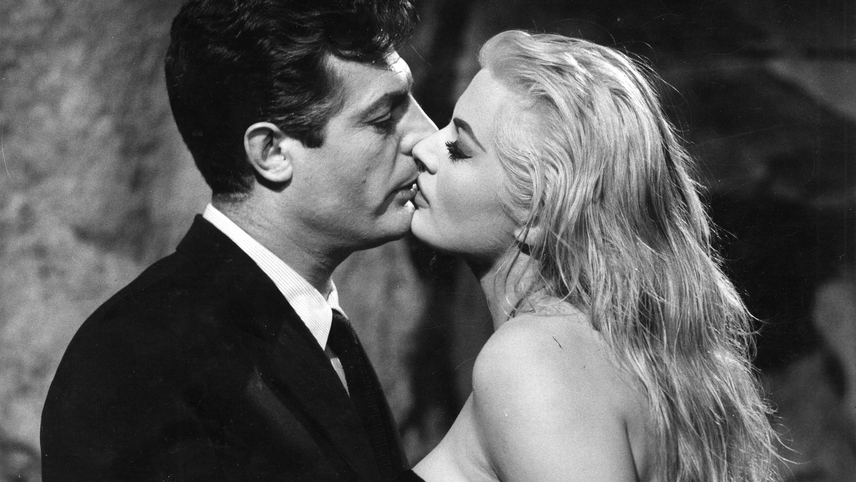
Roma belongs to a tradition that stretches back to the rubble-strewn streets of postwar Italy. Non-professional actors. Location shooting. Ordinary people as protagonists. A refusal to impose conventional dramatic structure on the messiness of daily life. The connection to Italian neorealism is not incidental. It is foundational.
Vittorio De Sica’s Bicycle Thieves told the story of a working man’s desperate search for a stolen bicycle. The plot was deliberately small. The emotional stakes were enormous precisely because they were ordinary. Roma operates on the same principle. Cleo’s life is not dramatic in the Hollywood sense. She cleans. She shops. She watches television with the children. The drama is in the texture of her existence, in the accumulation of small moments that reveal the shape of a life lived in service to others.
But Roma is not a neorealist film in any strict sense. De Sica worked with scarce resources and rough technique because postwar Italy demanded it. Cuarón works with a $15 million budget, an ARRI Alexa 65, and a Dolby Atmos sound mix. The formal sophistication is light-years beyond anything the neorealists could have imagined. Where Bicycle Thieves achieves its power through simplicity, Roma achieves its power through an almost overwhelming density of craft applied to subject matter that the craft world would typically ignore.
This is the productive paradox at the heart of the film. Cuarón lavishes blockbuster-level resources on a story about a maid. He uses the most advanced camera system available to photograph laundry. He employs the most sophisticated sound mixing technology ever developed to reproduce the sound of dogs barking in a Mexico City courtyard. The extravagance of the means and the modesty of the subject are in deliberate tension, and that tension is part of the point. If Cleo’s life is worth this much attention, then the hierarchy that placed her in the background was always wrong.
The neorealist ghost in Roma is not aesthetic. It is ethical. Both traditions insist that ordinary lives deserve the full weight of cinematic attention. The tools have changed. The conviction has not.
Netflix, the Oscars, and the Argument Over Where Cinema Lives
Roma arrived at a moment when the film industry was fighting over its own future. Netflix, still primarily known as a streaming platform, had financed a black-and-white, Spanish-language, 135-minute art film with no stars and released it simultaneously in theaters and on its platform. The major theater chains in Mexico, Cinépolis and Cinemex, refused to screen it because Netflix would not grant them a longer exclusivity window. AMC and Regal in the United States similarly declined to include it in their Oscar showcase lineups.
The paradox was sharp. Roma was the most cinematic film of its year. It was also the film that most directly challenged the assumption that cinema requires a cinema. Cuarón argued that he chose Netflix precisely because foreign-language films rarely receive adequate theatrical distribution. By streaming it globally, he ensured that audiences in Mexico City and Mumbai and Lagos could watch it on the same day, without waiting for a distributor to decide whether their market was worth the investment.
The Academy responded with ten nominations, including Best Picture, making Roma one of the most nominated foreign-language films in Oscar history. Cuarón won Best Director (his second, after Gravity) and Best Cinematography, becoming the first person ever to win both awards for the same film. The Best Foreign Language Film win made Roma the first Mexican production to take that prize. Yalitza Aparicio became the first Indigenous Mexican person nominated for an acting Oscar.
Roma did not win Best Picture. Green Book did. The loss was widely interpreted as a rejection of Netflix’s distribution model by an industry still uncomfortable with the idea that a film could premiere on a television screen and be considered for the highest award in cinema. Whether that interpretation is fair or not, the debate Roma ignited has not been resolved. The Criterion Collection subsequently released it on Blu-ray, the first Netflix original to receive that treatment, implicitly affirming that some films demand physical media and home theater systems capable of doing justice to their Atmos sound mix.
The irony persists. A film about the invisibility of domestic labor became the most visible battleground in a war between theatrical distribution and streaming. A film about being overlooked became impossible to ignore.
What the Camera Finds When You Stop Watching the Center of the Frame
Roma is one of those rare films that fundamentally changes on second viewing. The first time through, most viewers track Cleo. Her story is the emotional center, and the eye follows her naturally. But Cuarón has composed his frames so that the margins are as rich as the middle. There is an entire film happening at the edges.
On your second viewing, watch the backgrounds. In nearly every interior scene, there are figures in doorways, movements in adjacent rooms, reflections in glass. The children play in the periphery while adult conversations happen in the foreground. The grandmother moves through the house on her own private trajectory. The father appears less and less until his absence becomes its own visual fact: a space in the frame where a person used to stand.
Track the airplanes. They appear throughout the film, crossing the sky at regular intervals, visible through windows and in reflections. They are markers of time passing, but also of departure. The father leaves by air. The world above the roofline where Cleo sleeps is full of exits she cannot take.
Watch the car and the garage. The family’s wide Ford Galaxy barely fits through the narrow garage entrance, and each attempt to park it becomes a miniature drama of spatial negotiation. As the film progresses and the father leaves, the car is replaced by a smaller one. The garage, which was too tight for the old car, suddenly has room. This is storytelling through architecture: the family is shrinking, and the house adjusts.
Pay attention to the martial arts. Fermín practices a bizarre form of martial arts that the film presents without commentary. On a rewatch, his obsessive physical training reads as compensation, as a performance of masculine power by a man who will prove incapable of any meaningful commitment. His extended staff exercise in the nude is absurd and revealing in equal measure.
For the film’s quieter first hour, which some viewers find slow on initial viewing, a second viewing reveals it as essential groundwork. Every domestic routine Cleo performs in the first act becomes the foundation for everything the film later asks you to feel about her. You cannot understand the beach sequence without having watched her mop the floor, turn off the lights, carry the laundry to the roof. The repetition is the point. It is the weight of her life, measured in tasks.
Film Trivia
The maid who raised a director. Liboria “Libo” Rodríguez, the real woman Cleo is based on, was part of Cuarón’s life from the time he was nine months old. He spent years interviewing her about her daily routines, asking questions down to the millisecond level of detail. She attended the film’s premieres and has spoken publicly about seeing her own life on screen.
An actress who couldn’t swim. Yalitza Aparicio, like her character, could not swim when the beach sequence was filmed. The terror on her face as she wades into the ocean to rescue the children is not entirely performed. The production shot the film in chronological order, which Aparicio has said helped her build into the emotional intensity of the later scenes without having to manufacture it out of sequence.
A heist on set. During production in November 2016, the Roma crew was targeted by armed robbers. Two women were assaulted, five crew members were hospitalized, and phones, wallets, and jewelry were stolen. The incident was a reminder that the 1970s Mexico City being recreated on screen was, in some ways, not so far from the present.
The director who became his own DP. Cuarón’s regular cinematographer, Emmanuel Lubezki, was originally planned for the project but became unavailable. Rather than hire a replacement, Cuarón decided to shoot Roma himself, his first time operating as director of photography. The result won him the Academy Award for Best Cinematography, making him the first person in Oscar history to win both Best Director and Best Cinematography for the same film.
Seventy percent real. Production designer Eugenio Caballero used approximately seventy percent of the actual furniture from Cuarón’s childhood home on the film’s main set. Paintings, toys, kitchen items, and drapes were sourced from the family. Caballero, who grew up three blocks from Cuarón’s house in Colonia Roma, brought his own memories of the neighborhood to the project alongside the director’s.
This entry selects analytical dimensions from a pool. Five anchors are present: the critical verdict, performances, visual craft, reception and legacy, and the rewatchability guide. Earned sections cover sound design, production design, cultural and political context, and director’s body of work, each justified by Roma’s extraordinary depth in these areas. Two wildcard sections address dimensions unique to this film: the autobiographical point-of-view inversion (telling your own story through someone else’s eyes) and the water motif that structures the film from its first image to its last. A genre lineage section traces Roma’s relationship to Italian neorealism. Sections on awards history and adaptation analysis are omitted; the former is folded into the reception section, and the latter does not apply, as Roma is an original screenplay drawn from memory rather than adapted from a prior work.

Leave a Reply