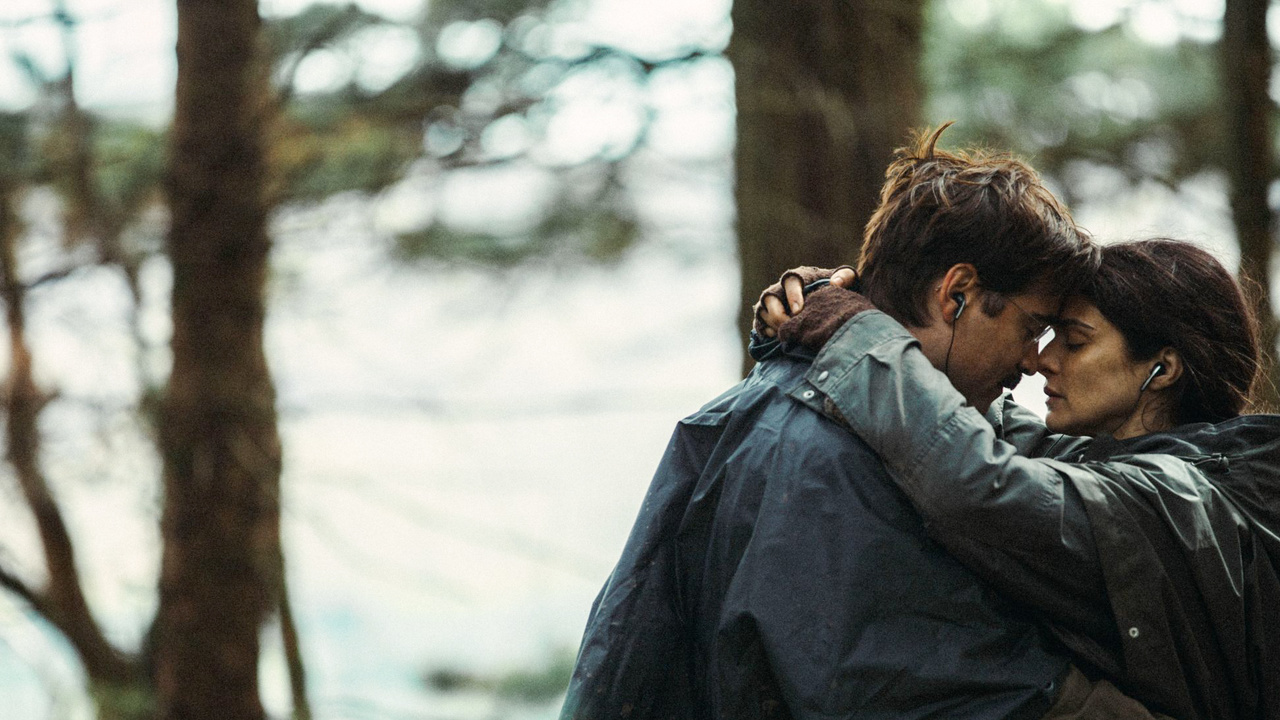
Director: Yorgos Lanthimos · Cinematographer: Thimios Bakatakis · Sound Design: Johnnie Burn · Music: Compiled (Beethoven, Shostakovich, Schnittke, Stravinsky, Nick Cave & Kylie Minogue) · Key Cast: Colin Farrell, Rachel Weisz, Léa Seydoux, Ben Whishaw, John C. Reilly, Olivia Colman, Angeliki Papoulia · Runtime: 119 minutes · Studio: Element Pictures / Scarlet Films / Faliro House Productions · Budget: $4 million · Box Office: $18 million worldwide
1. The Lobster: A Love Story for People Who Hate Love Stories
Yorgos Lanthimos’s English-language debut is one of the sharpest satires of romantic culture produced this century, and also one of the most structurally uneven. Both of these things are true at the same time, and pretending otherwise does a disservice to a film that is too intelligent to need protection from honest criticism.
The premise is simple and perfect. In a dystopian near-future, single people are sent to a hotel where they have 45 days to find a romantic partner. If they fail, they are transformed into the animal of their choice. Colin Farrell’s David, recently abandoned by his wife, chooses the lobster: long-lived, blue-blooded, fertile until death. The hotel operates like a corporate retreat designed by someone who read about human intimacy in a textbook. Couples are formed by matching shared traits. A limp. A lisp. A tendency toward nosebleeds. The system is grotesque, and it is also, Lanthimos argues, not that far from how we actually pair off. The dating apps just hide the mechanism more gracefully.
The first half of the film is extraordinary. The hotel sequences are Lanthimos at his most controlled and funniest: a world of mandatory couple’s activities, instructional skits about the dangers of solitude, and tranquilizer-dart hunts for “Loners” in the nearby woods. Every detail is calibrated. Every scene lands. The deadpan performances create a comedy so dry it occasionally catches fire.
The second half, set among the Loners in the forest, is where the film falters. Léa Seydoux’s Loner Leader enforces an anti-romance ideology as rigid as the hotel’s pro-romance one, and the structural irony is clear: both systems are tyrannies. But the forest sequences lack the density, the invention, and the perverse comic energy of the hotel. The film slows. The surprises thin out. The romance between David and Rachel Weisz’s Short Sighted Woman, while moving, feels like it belongs to a more conventional film than the one Lanthimos built in the first hour.
This is not a fatal flaw. It is a real one. The Lobster is a film with a perfect first act, a strong third act, and a middle that sags under the weight of its own structural symmetry. The ending, ambiguous and visceral, recovers much of the lost ground. But the disparity between the two halves keeps this from reaching the controlled perfection of Dogtooth or the baroque richness of The Favourite.
Verdict: 8/10. Half a masterpiece and half a very good film. The Lobster’s best sequences are among the funniest and most unsettling in Lanthimos’s career. Its weakest are merely competent. For most directors, that would be a triumph. For this one, it is a compromise.
2. Colin Farrell’s Belly and the Art of Deliberate Gracelessness
Farrell gained weight for the role. This is the kind of detail that gets noted in trivia sections and then forgotten, but it is central to what the performance achieves. David is not handsome in this film. He is soft, slightly doughy, physically uncertain. Farrell, one of the most conventionally attractive actors of his generation, erased every trace of charisma and replaced it with the demeanor of a man who has spent his adult life being adequate. When David speaks, his voice is flat, affectless, stripped of the Irish lilt that usually gives Farrell’s delivery its warmth. He sounds like a man reading aloud from a form he does not fully understand.
This is a performance built on subtraction. Farrell removes confidence, removes charm, removes physical ease. What remains is a human being defined almost entirely by his deficits: his poor eyesight, his passivity, his willingness to accept absurd premises because questioning them would require a self-possession he does not have. It is one of the bravest things a movie star has done in the 2010s, and it works because Farrell commits to the blankness without ever winking at the audience.
The supporting cast operates in the same register but with sharper edges. Ben Whishaw’s Limping Man is the most frightening character in the film, a man so desperate for a match that he will manufacture one through self-mutilation. The performance is almost invisible in its restraint. Whishaw speaks softly, moves carefully, and does something monstrous with the calm of someone adjusting a thermostat. John C. Reilly’s Lisping Man provides warmth and pathos in equal measure, his natural likability weaponized into a portrait of someone too decent for the system he inhabits.
Olivia Colman’s Hotel Manager deserves particular attention. She delivers bureaucratic cruelty with the pleasant efficiency of a concierge at a mid-range resort. Her instructional scenes, in which she demonstrates the practical dangers of being single through absurd skits, are among the film’s comic peaks. Colman plays the role without irony, which is what makes it so funny. She believes in the system. She administers it with pride. She is the face of institutional violence wearing a name tag and a practiced smile.
Rachel Weisz performs double duty as both narrator and love interest, and her voiceover is the film’s most divisive element. The narration is clinical, detached, describing events and emotions in the same flattened register. Some viewers find it suffocating. Others find it essential. It is, at minimum, consistent with the film’s thesis: in this world, even the language of love has been sterilized.
3. Overcast, Overgrown, Overlooked: Bakatakis in the Irish Midlands
The Lobster was shot in County Kerry and County Wicklow, Ireland, and the landscape is as much a character as any of the actors. Bakatakis, reuniting with Lanthimos for a second time after Dogtooth, trades the bleached Mediterranean light of that film for something colder, greener, and perpetually damp. The overcast Irish sky creates a natural softbox effect: even, diffuse light with no harsh shadows, no dramatic contrasts. Everything looks the same temperature. Everything looks slightly muted. The visual register matches the emotional one.
The hotel sequences are shot with the same locked-off, slightly too-wide framing that Bakatakis developed for Dogtooth, but the application is different. In Dogtooth, the wide frame made walls visible. Here, it makes empty space visible. The hotel’s dining room, its ballroom, its corridors are always slightly too large for the people in them. Couples sit at tables with room for more. Singles walk through lobbies that echo. The compositions consistently emphasize the gap between people, the physical distance that the social system is designed to eliminate but that the camera insists on documenting.
The production worked almost entirely with natural light. Makeup was not used. The absence of these two standard filmmaking tools gives the image a flatness and a transparency that serve the satire. The actors look like real people caught in fluorescent lighting, not like movie stars arranged for the camera. Farrell’s weight gain is more visible without makeup to contour it. The hotel’s interiors look institutional rather than cinematic. The forest looks cold and uncomfortable rather than romantically wild. Every visual decision strips away the layer of aesthetic pleasure that cinema usually provides, leaving the viewer in a space that is functional, unglamorous, and slightly depressing.
The most visually striking sequence is the hunt, in which hotel guests track Loners through the woods with tranquilizer darts. Bakatakis shoots it with a steadicam that moves through the trees at a pace that is too slow for action and too fast for observation. The hunt is filmed like a nature documentary in which the predators are bored middle-aged people in rain jackets. The visual language refuses to provide the excitement that a chase should generate, and this refusal is itself the commentary.
4. Beethoven, Shostakovich, and Nick Cave Walk Into a Hotel
The Lobster has no original score. Its soundtrack is a curated compilation of pre-existing classical and popular recordings, selected by Lanthimos and music supervisor Amy Ashworth. The choices are not ambient. They are aggressive. String quartets by Beethoven, Shostakovich, and Schnittke interrupt the film’s long stretches of naturalistic silence with sudden, intense bursts of emotional intensity. The contrast is jarring, which is the point.
The dominant musical presence is the string quartet format itself: intimate, chamber-scaled, designed for small rooms. This is music written for the space between four people. In the context of a film about the desperate search for a partner, the string quartet becomes a metaphor for the very thing the characters lack. The music models a kind of connection, four voices in conversation, that the social system has made impossible by reducing love to a matching exercise.
Shostakovich’s Eighth Quartet, written in three days in what the composer described as a state of near-suicidal despair, appears at moments of emotional crisis. The music’s anguish is disproportionate to what is happening on screen, and this disproportion creates the film’s most complex effects. When the Heartless Woman kicks David’s dog to death (off-screen, mercifully), the Shostakovich that follows is not a response to the event but a response to the scale of feeling that the characters cannot express. The music grieves on their behalf.
Nick Cave and Kylie Minogue’s “Where the Wild Roses Grow,” a murder ballad about a man who kills the woman he loves, appears in the film’s romantic middle section. Its placement is both tender and ominous. The song is beautiful. It is also about the destruction of beauty. It whispers what the film will eventually shout: that in this world, love is not the opposite of violence. It is the occasion for it.
Johnnie Burn’s sound design fills the spaces between the music with ambient naturalism: birdsong, rain, the hum of hotel machinery. These sounds are not dramatized. They exist at the volume and texture of everyday life, which makes the sudden eruptions of Beethoven or Schnittke feel like intrusions from another emotional register entirely. The soundtrack works as a structural argument: the silence is the world the characters live in. The music is the world they are denied access to.
5. Matching by Defect: Love as Bureaucratic Sorting
This is the section the film demands and no template provides. The Lobster’s central satirical engine is not the transformation premise. It is the compatibility system. The hotel pairs people by shared traits, and the traits it recognizes are, without exception, deficiencies. A limp. A lisp. Short-sightedness. A tendency to nosebleed. Love, in this world, is a bureaucratic exercise in matching weaknesses.
The implications unfold slowly and then all at once. If compatibility is determined by shared flaws, then the system incentivizes the preservation of those flaws. No one would cure their limp if their partnership depends on it. No one would get laser eye surgery. The defect becomes the relationship’s foundation, its justification, and its prison. Ben Whishaw’s Limping Man takes this logic to its endpoint when he smashes his own nose against hard surfaces to simulate nosebleeds, manufacturing the deficiency that will match him with the Nosebleed Woman. The scene is simultaneously the film’s funniest and most horrifying moment because the logic is impeccable. Within the system’s rules, what he does makes perfect sense.
Lanthimos and Filippou are arguing something specific here: that romantic culture, the real one, operates on a version of this same principle. Dating profiles list interests, habits, preferences. Algorithms sort humans by compatibility scores derived from shared data points. The system claims to be finding love. What it is actually doing is finding overlap. And overlap is not love. It is taxonomy. The film’s genius is that it makes this argument not through dialogue or narration but through the structure of its world. The system is absurd because it is too literal. But its literalism is a mirror held up to a culture that has already accepted the premise and simply disguised it better.
The Loners in the forest reject this model entirely, but their alternative is no less tyrannical. The Loner Leader forbids all romantic contact. Members who are caught flirting have their lips sliced, a punishment called “the red intercourse” and “the red kiss.” The Loners have not escaped the system. They have merely inverted it. Where the hotel compels coupling, the Loners compel isolation. Neither side can tolerate the possibility that love might be spontaneous, irrational, and ungovernable. Both insist on rules. Both punish deviation. The film’s structural symmetry between the two halves is the argument: authoritarianism does not care whether it wears the mask of romance or the mask of freedom. It cares only that the rules are followed.
David’s final act, sitting in a diner bathroom with a steak knife, preparing to blind himself so that he and the Short Sighted Woman will share the same defect, is the film’s thesis crystallized into a single image. Love in this world can only be proven through self-mutilation. The system has so thoroughly colonized the concept of compatibility that David cannot imagine another way to be worthy of someone. He must damage himself to match. The film cuts to black before we see whether he goes through with it, and that ambiguity is the cruelest and most honest thing about the ending. We do not know if David blinds himself. We know only that he has been brought to a place where blindness seems like a reasonable price for companionship.
6. From Athens to County Kerry: Lanthimos Learns English
The Lobster is the film where Lanthimos discovered what his sensibility could do with resources, star power, and the English language. The transition from Greek microbudgets to a $4 million international co-production with Colin Farrell attached was a leap that could have diluted everything that made Dogtooth and Alps distinctive. It did not.
What Lanthimos brought from Greece to Ireland was the method, not the material. The deadpan delivery. The refusal to explain the rules of the world beyond what the characters themselves understand. The casting of actors against their public images (Farrell as a schlub, Colman as a bureaucrat, Seydoux as a militant). The willingness to let scenes run longer than comfort allows. The use of violence not as spectacle but as punctuation.
What the English language gave him was reach. The Greek films were international festival sensations but remained niche. The Lobster played in multiplexes. It was released by A24, the distributor that had become synonymous with adventurous mainstream cinema. It introduced Lanthimos to audiences who had never heard of Dogtooth, and it did so without diluting the strangeness that made his work necessary.
The collaboration with Filippou survived the language change intact. Their dialogue in English has the same flattened, over-precise quality it had in Greek, and this turns out to be one of those rare cases where a stylistic choice translates perfectly. The characters in The Lobster speak English the way non-native speakers sometimes do: correctly, carefully, without idiom or inflection. The language feels borrowed, which is exactly right for a world where even the words people use to describe their feelings are institutionally prescribed.
It is also the film where Lanthimos began to attract the actors who would populate his subsequent career. Colman would return for The Favourite. Weisz would not, but her presence here opened the door to the caliber of performer who would seek Lanthimos out. The Lobster proved that working with this director did not require abandoning craft. It required redirecting it.
7. A Film of Two Halves, and the Seam That Shows
The most discussed structural problem in The Lobster is the transition between hotel and forest. Nearly every critic who reviewed the film noted it. Peter Bradshaw described the film as running out of ideas at its midway point. Multiple reviewers used the word “sag.” The consensus is not wrong, but it deserves more precise diagnosis than it usually receives.
The hotel sequences work because the world-building is dense and the rules are clear. Every scene adds a new detail to the system: the mandatory couple’s activities, the punishment for solitary sexual pleasure, the staged demonstrations of what happens to single people (a man dining alone chokes because there is no one to perform the Heimlich maneuver). The viewer is in a constant state of discovery, learning the rules at the same rate as David. The comedy is cumulative. Each new absurdity builds on the last.
The forest sequences lose this engine. The Loners’ system is simpler: no romance, no physical contact, punishment for violation. There are fewer rules to learn, fewer surprises to discover. The comic density thins. The narrative shifts from institutional satire to individual love story, and the love story, while affecting, does not have the same formal inventiveness as the satire it replaces.
Lanthimos and Filippou were aware of the structural risk. The symmetry between the two halves is deliberate: the hotel and the forest as mirror images of the same authoritarian impulse. But symmetry in theme does not guarantee symmetry in energy. The hotel half is propulsive. The forest half is reflective. Both modes are valid, but the transition between them is abrupt, and the film never quite recovers the comedic momentum it abandons at the midpoint.
What saves the second half from failure is the emotional specificity of the David-Short Sighted Woman romance. Weisz and Farrell play their scenes with a tenderness that feels earned precisely because the world they inhabit has made tenderness illegal. Their secret signals, their covert physical contact, the elaborate system of codes they develop to express affection under surveillance: these details are quietly moving. The love story works not because it is well-written (it is) but because the system around it has made love so costly that every small gesture carries enormous weight.
8. Four Million Dollars, Five Countries, and the Logistics of Absurdism
The Lobster was an international co-production between Ireland, the United Kingdom, Greece, France, and the Netherlands. This five-country structure was not an artistic choice but a financial one: European co-production treaties allow filmmakers to pool funding from multiple national film agencies, and Lanthimos’s producers assembled a patchwork of support that brought the budget to $4 million. It was a significant step up from Dogtooth’s €250,000, but by any mainstream standard it remained tiny for a film with an international cast led by a Hollywood star.
Principal photography began in March 2014 and concluded in May, shot primarily in County Kerry and County Wicklow, Ireland. The Parknasilla Resort in County Kerry served as the hotel, its slightly faded grandeur and surrounding grounds providing exactly the institutional-pastoral atmosphere the script required. The Irish landscape, wet, green, overcast, became so central to the film’s visual identity that it is difficult to imagine The Lobster set anywhere else, even though the screenplay specifies no geography.
Casting moved quickly once Farrell committed. Jason Clarke had originally been attached but withdrew due to scheduling conflicts with Everest. Elizabeth Olsen was approached for the Short Sighted Woman but was locked into Marvel’s production schedule for Avengers: Age of Ultron. Both departures redirected the film. Farrell brought a vulnerability that Clarke’s more physically imposing presence might not have permitted. Weisz brought an intelligence and restraint that became the film’s emotional center.
The decision to work without makeup and with almost exclusively natural light was practical as much as aesthetic. With a compressed shooting schedule and a budget that did not allow for extensive lighting setups, Bakatakis and Lanthimos chose to embrace the conditions rather than fight them. The resulting image, flat, honest, slightly unglamorous, became the visual signature that distinguished the film from the polished dystopias of larger-budget science fiction.
9. Cannes, A24, and the Mainstreaming of the Weird
The Lobster premiered at the 2015 Cannes Film Festival, where it competed for the Palme d’Or and won the Jury Prize. The award confirmed what Dogtooth had suggested: Lanthimos was not a one-film curiosity but a director building a sustained body of work at the highest international level.
The distribution path in the United States tells its own story. Alchemy initially acquired U.S. rights but ran into financial difficulties and sold them to A24, which released the film in May 2016. A24’s involvement was significant. By 2016, the company had become the most reliable curator of adventurous English-language cinema, and its brand signaled to audiences that The Lobster was strange but accessible, challenging but entertaining. The film grossed $9 million domestically and $18 million worldwide on a $4 million budget, numbers that made it a clear commercial success.
The Oscar nomination for Best Original Screenplay at the 89th Academy Awards placed Lanthimos and Filippou alongside the likes of Kenneth Lonergan and Taylor Sheridan. It was a nomination that said: this kind of filmmaking belongs in the mainstream conversation. Lanthimos did not win, but the nomination laid the groundwork for The Favourite’s ten nominations three years later.
Critical response was overwhelmingly positive, with an 88% approval rating on Rotten Tomatoes from 268 reviews. The recurring complaint, the second-half sag, was noted by even the film’s admirers. But the overall assessment was one of admiration for a film that took enormous creative risks and landed most of them. Wai Chee Dimock, writing in the Los Angeles Review of Books, compared Lanthimos to Samuel Beckett, noting that absurdist theater seemed to be second nature to this Greek filmmaker. The comparison is apt. Both artists build closed systems, populate them with characters who cannot escape, and find in that entrapment a comedy that is indistinguishable from despair.
The film’s cultural footprint extends beyond its box office. “What animal would you choose?” became a conversational prompt that entered popular culture. The premise was parodied, referenced, and discussed in contexts far beyond film criticism. The Lobster achieved that rarest of things for an art-house film: it became a reference point that people who had not seen it could still understand.
10. What to Watch for When You Return to the Hotel
The Lobster reveals its machinery more clearly on second viewing. The first time, you are processing the world. The second time, you can watch the performances.
Count the lies David tells. He is presented as a passive, honest man, but he is not. He lies about his shortsightedness. He feigns heartlessness to attract the Heartless Woman. He manipulates Robert’s emotions. David is not a victim of the system. He is a participant in it, and tracking his deceptions across the full runtime reframes the character entirely.
Watch the background couples. In the hotel dining room, in the hallways, on the grounds, there are couples in the background of nearly every scene. They hold hands. They walk in step. They mirror each other’s postures. On first viewing, they are set dressing. On second viewing, they are the system’s product: paired humans performing compatibility in synchronized motion, and the performance looks exactly as hollow as it should.
Listen to the voiceover against the image. Weisz’s narration frequently describes events with a clinical detachment that contradicts the emotional content of what is being shown. In the forest scenes especially, the narration tells one story and the actors’ bodies tell another. The gap between word and image is where the real love story lives.
Track the animals. The film is populated with animals in the background: donkeys, peacocks, a camel, flamingos. Each of them is, within the film’s logic, a former person who failed. They are everywhere, and no character acknowledges them. On rewatch, every animal in frame becomes a ghost story.
Revisit the final scene with the steak knife. Watch Farrell’s hands. Watch how long the shot holds. Notice that the film gives you just enough time to believe he will do it, then cuts. The ambiguity is not evasive. It is the only honest ending available, because certainty would reduce a philosophical question to a plot resolution.
Film Trivia
Jason Clarke was the original David. Clarke was cast in the lead before scheduling conflicts with Everest forced him to drop out. Colin Farrell replaced him, gained weight for the role, and delivered a performance that redefined his career. Elizabeth Olsen was also attached as the Short Sighted Woman before her Marvel commitments intervened. The film that exists is the product of two fortuitous casting losses.
No makeup was used. The production made a deliberate decision to eliminate cosmetics entirely. Actors appeared on camera with their actual skin, actual blemishes, actual complexions. Combined with the use of almost exclusively natural light, this gave the image a transparency that made every face look slightly too real for cinema, which was precisely the effect Lanthimos wanted.
Olivia Colman sings. In one of the film’s most unsettling details, Colman’s Hotel Manager performs a karaoke rendition of “Something’s Gotten Hold of My Heart” during a hotel event. The scene was not scripted as a musical moment. Colman’s willingness to sing earnestly, without ironic distance, in a scene of institutional absurdity made it one of the film’s most memorable and uncomfortable sequences.
The Loner’s rule about electronic music. Seydoux’s Loner Leader announces that the group dances alone, which is why they only play electronic music. The line is delivered with complete seriousness and is never revisited or explained. It is one of dozens of world-building details that Lanthimos and Filippou planted throughout the script, each one suggesting an entire history of ideological justification behind a single arbitrary rule.
A24 got the film by accident. The original U.S. distributor, Alchemy, acquired the rights but suffered financial difficulties before the release date. A24 purchased the rights from the struggling company, rescheduled the release from March to May 2016, and gave it the marketing campaign that turned it into a crossover hit. Without Alchemy’s collapse, The Lobster might never have reached the audience that made it a cultural phenomenon.
This entry selects analytical dimensions from a pool. The five anchors are present: critical verdict, performances, visual craft, reception and legacy, and rewatchability guide. Earned sections cover the compiled soundtrack, the director’s body of work, screenplay structure, and production history. One wildcard section, “Matching by Defect,” examines the film’s satirical treatment of compatibility logic as a system of bureaucratic sorting by shared deficiencies. Sections on cultural context and awards history are omitted: the film’s dystopian setting resists specific cultural mapping, and its awards trajectory is addressed within the reception section.



Leave a Reply